
The United States continues to navigate a complex economic and political environment, with recent developments shaping the nation’s trajectory.
Economic Overview
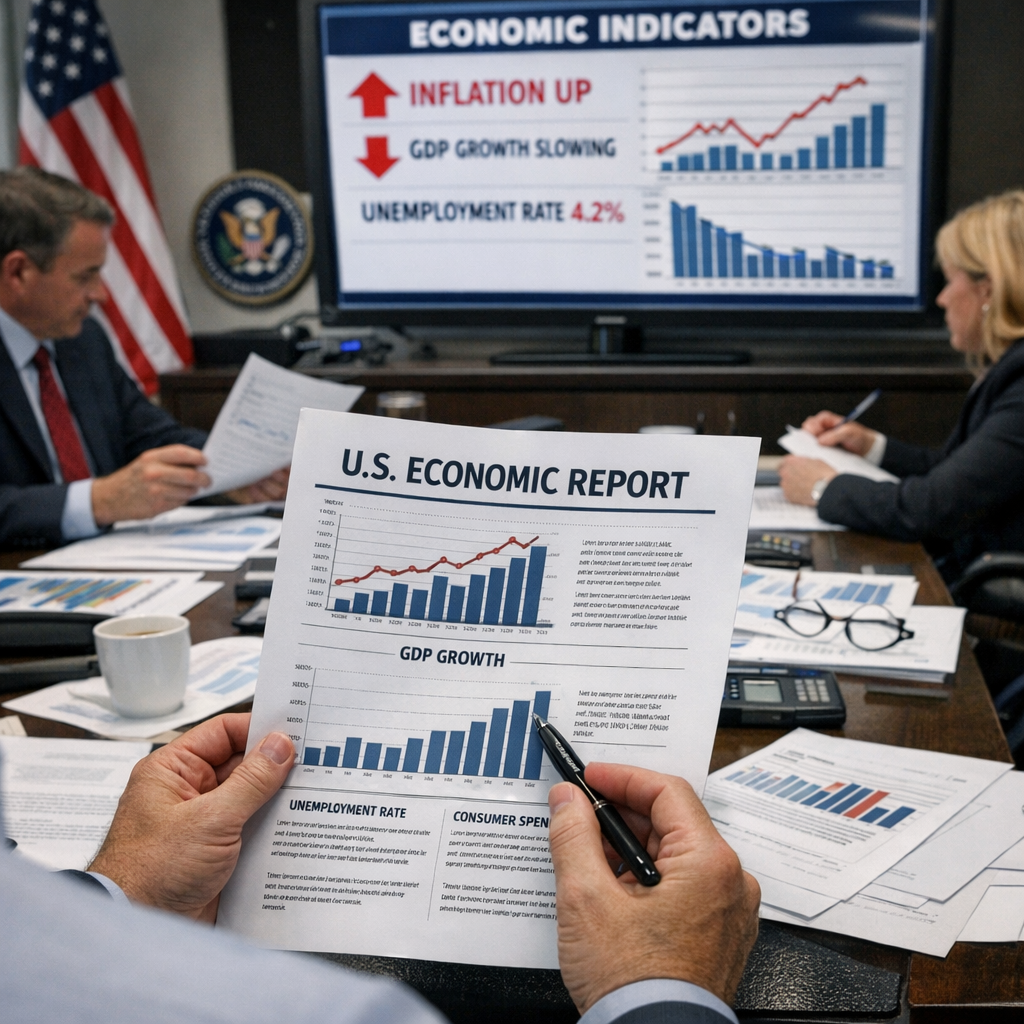
In the first quarter of 2026, the U.S. economy experienced a 2% annualized growth rate, rebounding from a sluggish 0.5% in the previous quarter. This recovery was largely attributed to increased federal spending following a 43-day government shutdown. However, the ongoing conflict in Iran has introduced economic uncertainties, particularly due to disruptions in the Strait of Hormuz, leading to rising energy prices and inflationary pressures. Consumer spending growth has slowed, reflecting financial strains on households, while business investments, especially in artificial intelligence, have surged. Residential investments, conversely, have declined for the fifth consecutive quarter. The Federal Reserve has maintained interest rates, citing the uncertain outlook stemming from geopolitical tensions.
Political Landscape
The U.S. political arena remains predominantly influenced by two major parties: the Democratic Party and the Republican Party. While these parties contest presidential elections every four years and have national organizations, they often function as loose alliances of state and local entities between elections. Other parties occasionally challenge the dominance of the Democrats and Republicans, but the two-party system continues to be a defining feature of American politics.
Understanding these economic and political dynamics is crucial for comprehending the current state of the nation and anticipating future developments.